Launch offer — valid today only

📄 Digital book in PDF · read it on your phone or print it

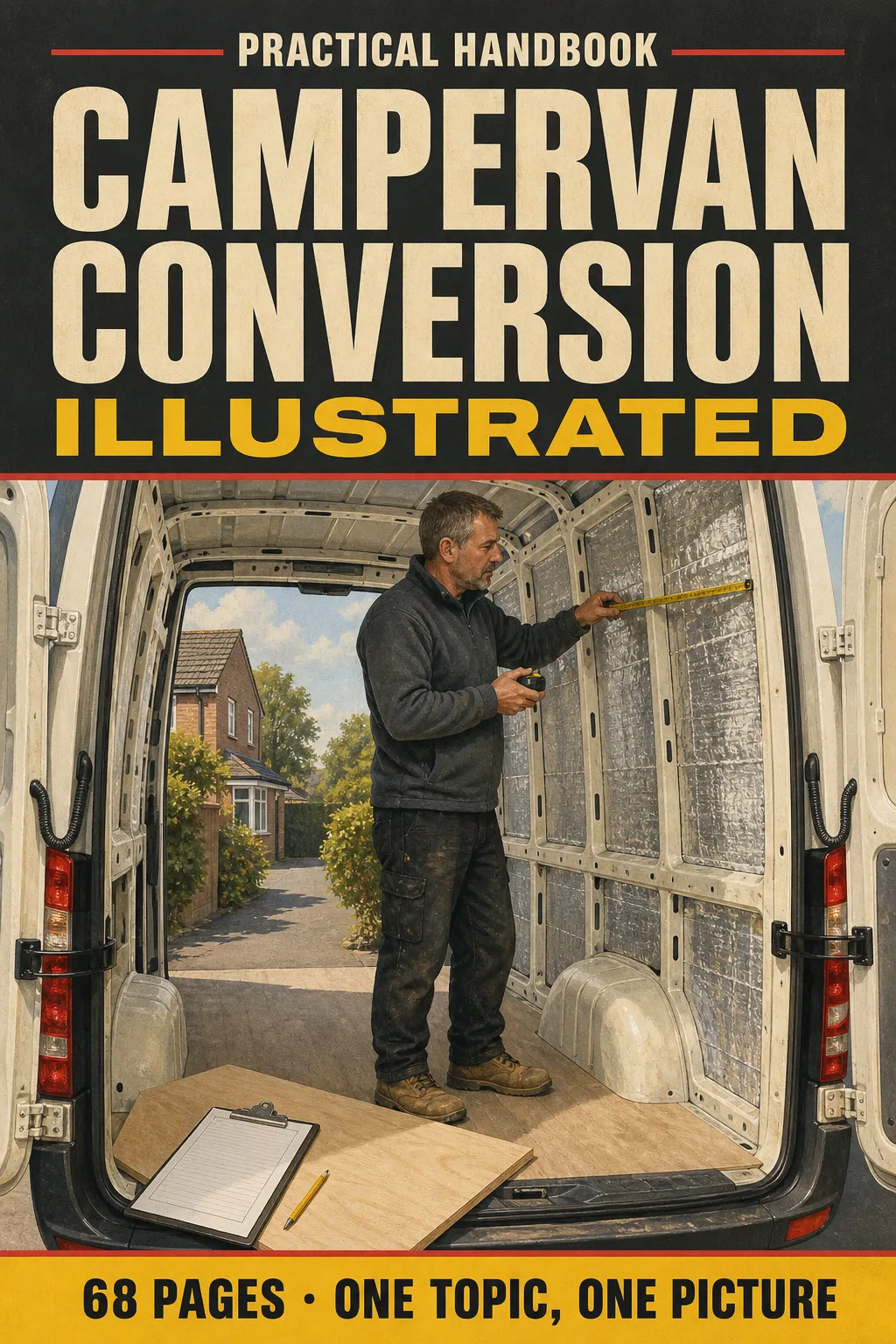
Campervan Conversion and Motor Caravan Rules in Drawings Every Job in the Right Order

Payload, windows, roof vents, insulation and vapour control, lining, furniture, water, 12 V electrics and re-registering as a motor caravan. Each topic has its own page: the drawing first, then what you need to remember. 68 illustrated pages.

SHOW ME THE BUILD IN ORDER

🔒 Secure checkout · PDF by email · 30-day guarantee

Every topic, its own pageEach job drawn and labelled, with the explanation alongside
68 illustrated pages9 parts, from the right build order to the final pre-trip checklist
Up-to-date sourcesDVLA and GOV.UK guidance, BS EN 1646-1 for motor caravans and BS 7671
PDF by emailFormat

Look Inside the Book

Every page has one large drawing and a box with the weights, layers and steps you need to know:

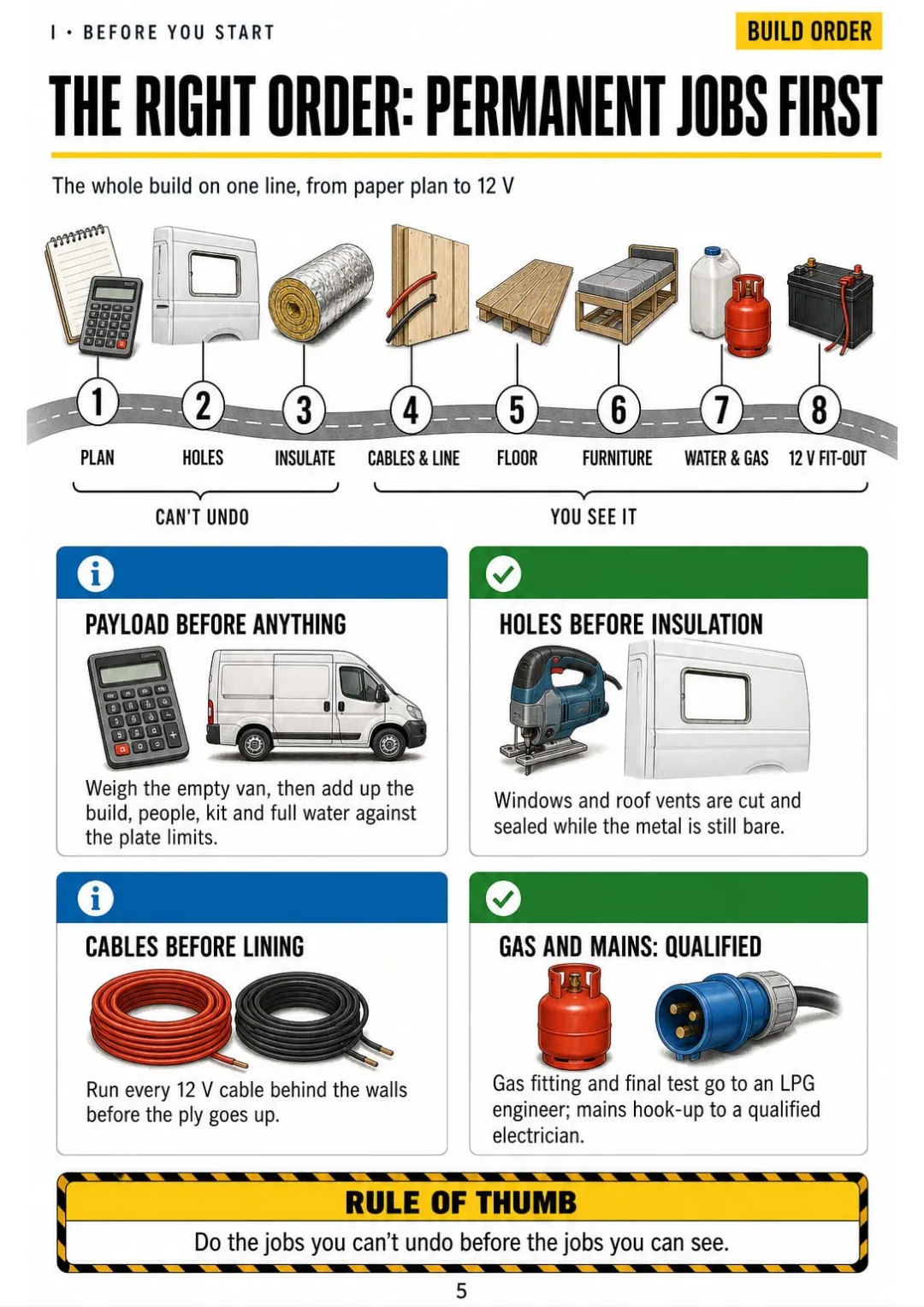
8 stages in order: plan, holes, insulation, lining, floor, furniture, water and gas, 12 V
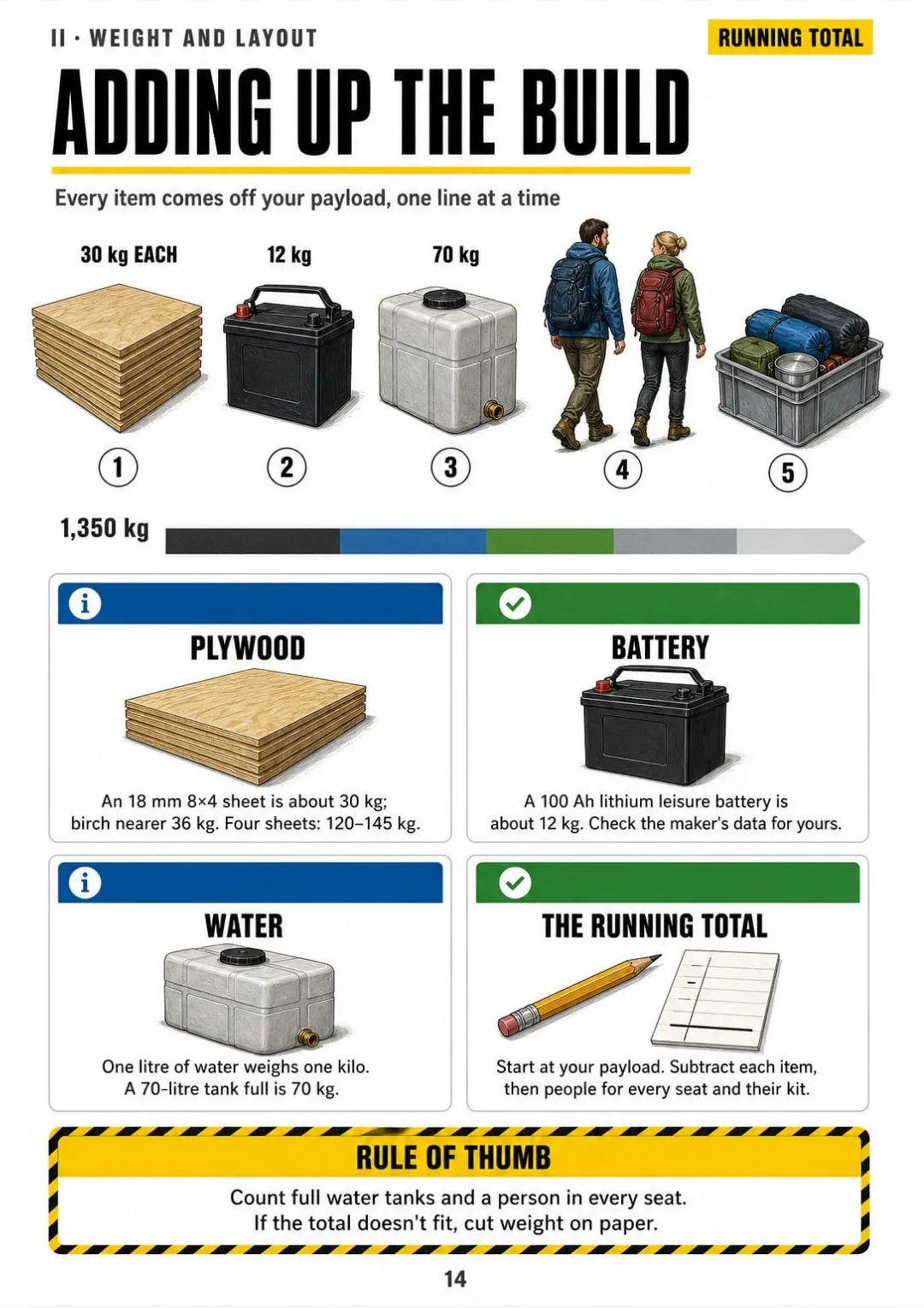
18 mm ply about 30 kg a sheet, 100 Ah lithium about 12 kg, 70 litres = 70 kg
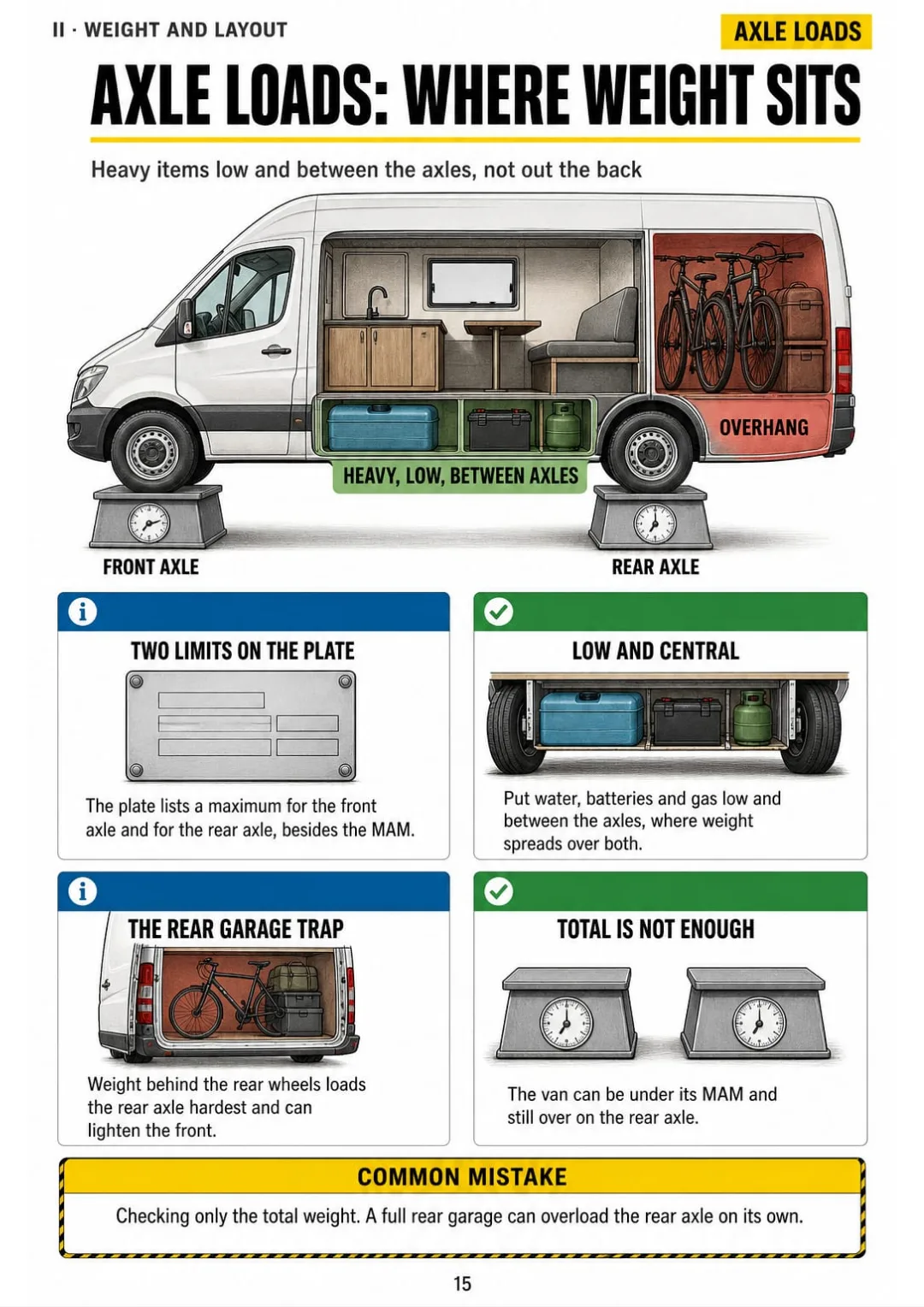
Water, batteries and gas low and between the axles; check each axle limit
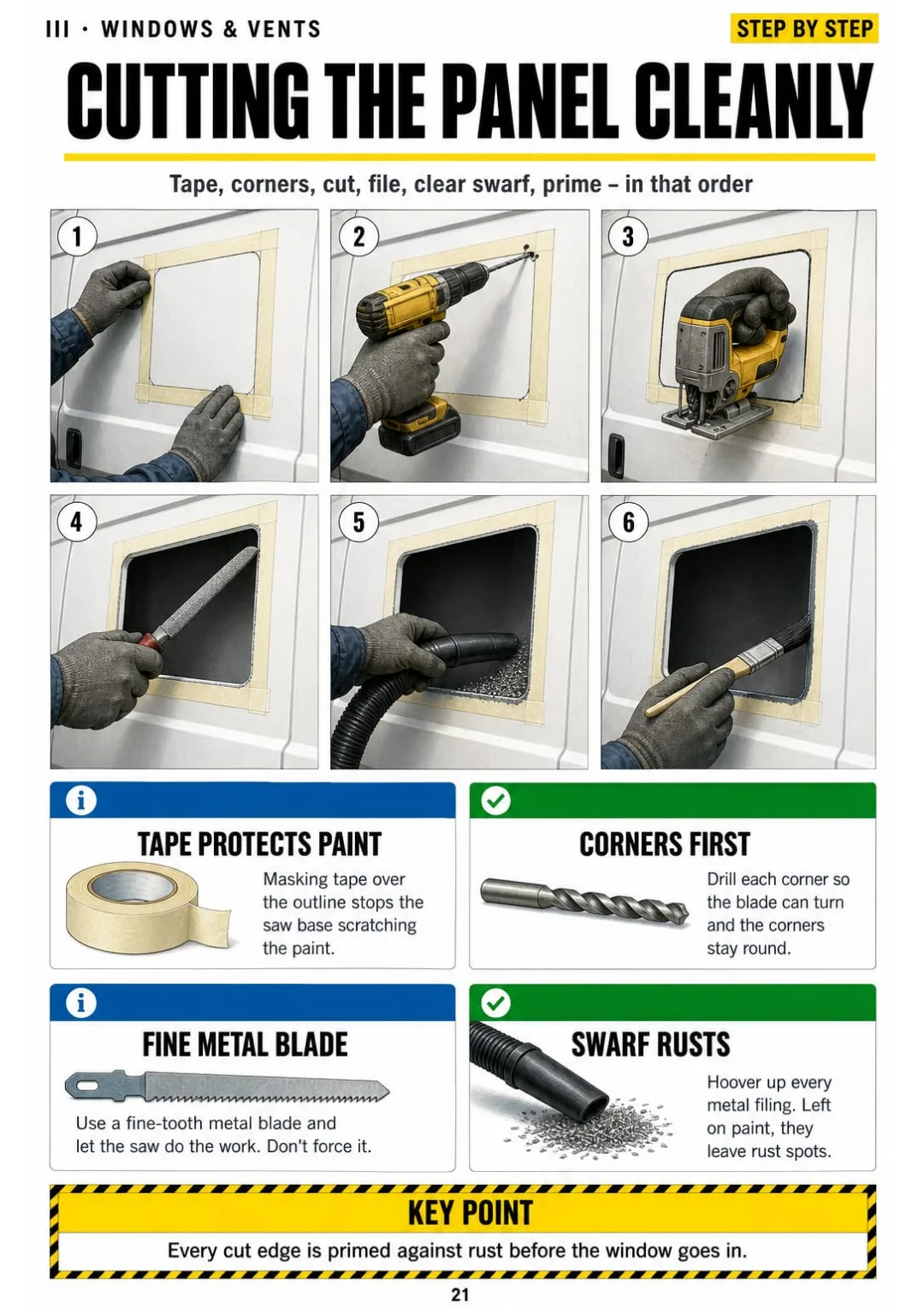
Tape, drill corners, cut, file, clear the swarf, prime the edge.
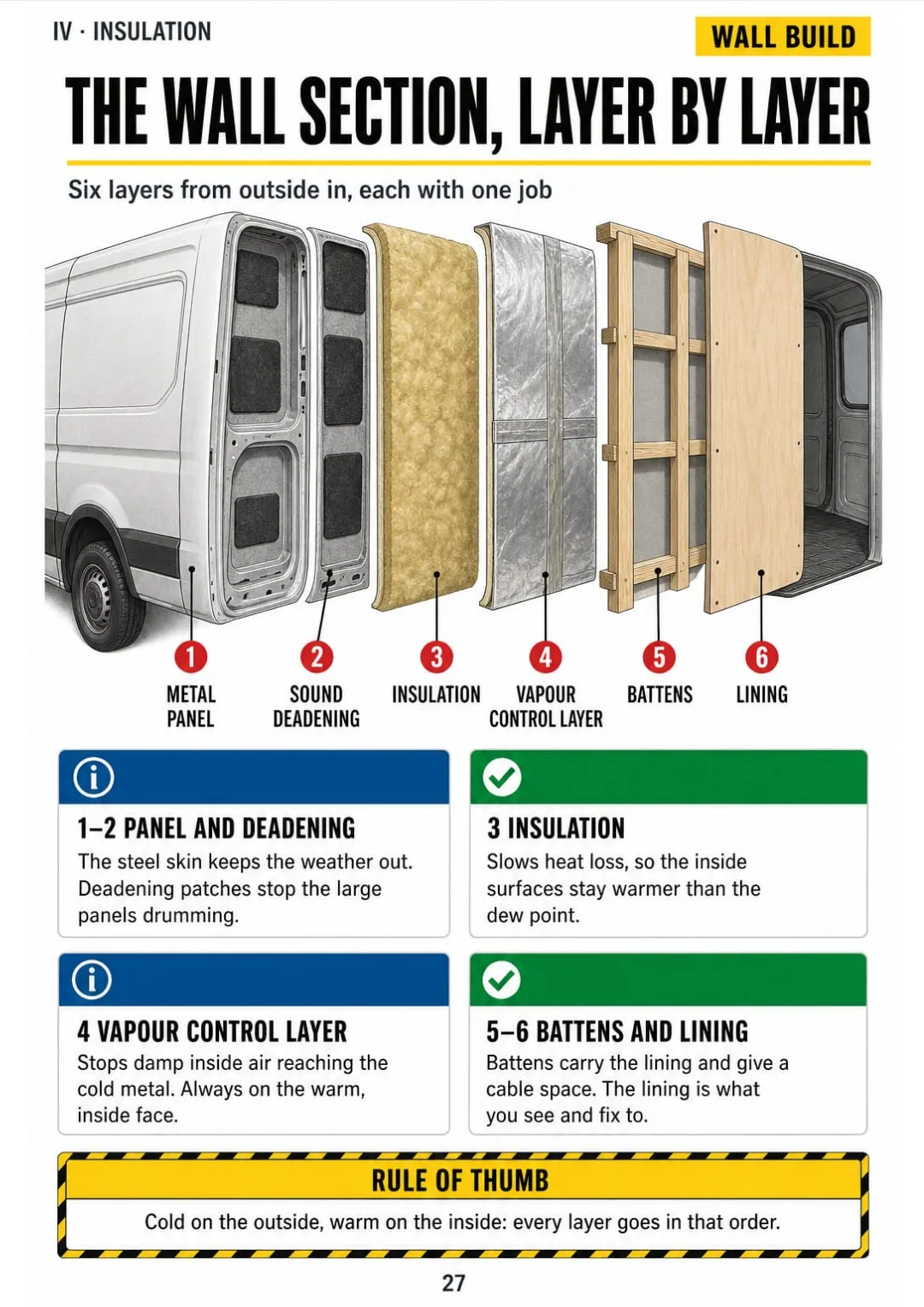
Metal, deadening, insulation, vapour layer, battens, lining: the wall in order.
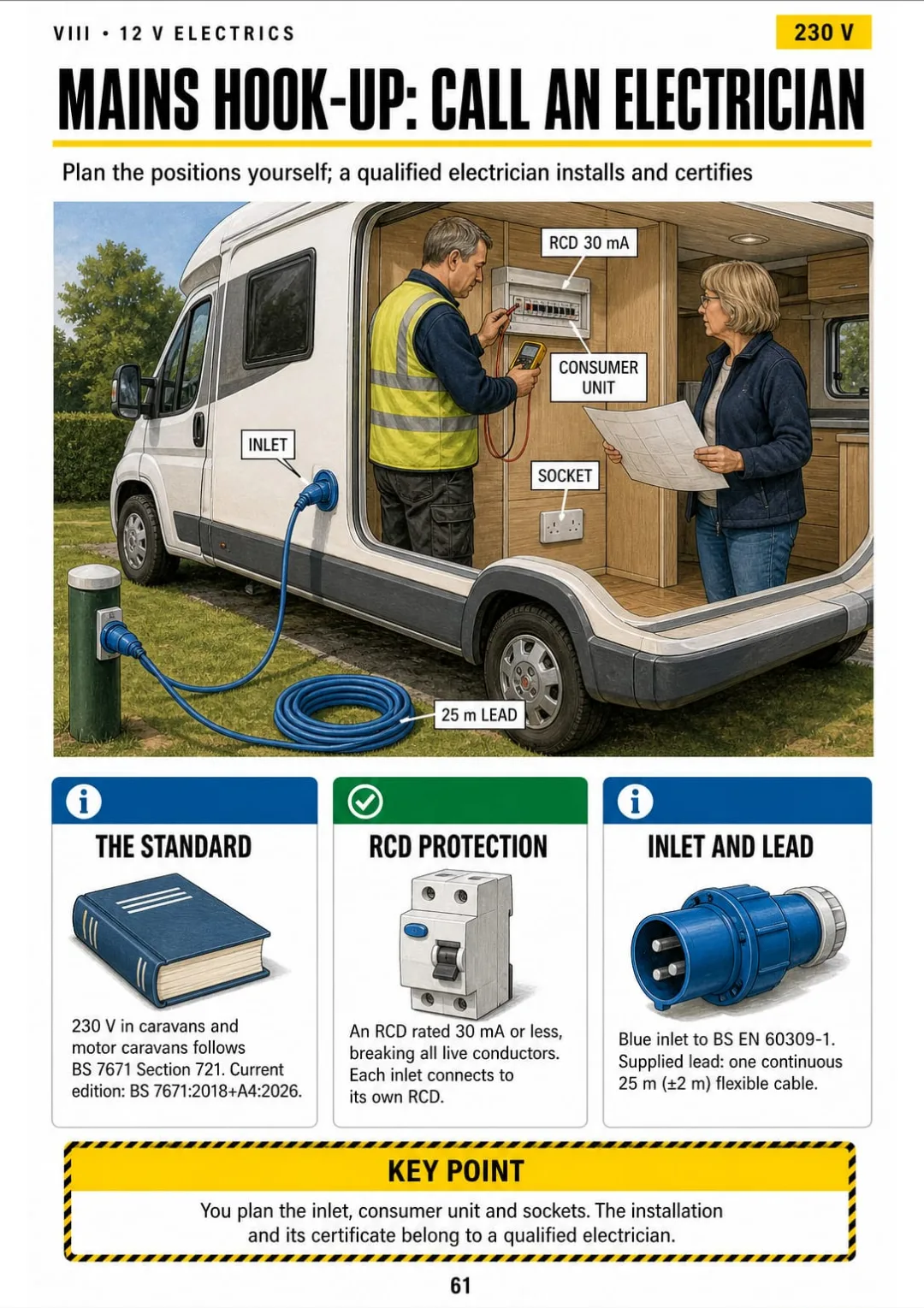
Hook-up follows BS 7671 Section 721: blue inlet, 30 mA RCD, sockets, certificate
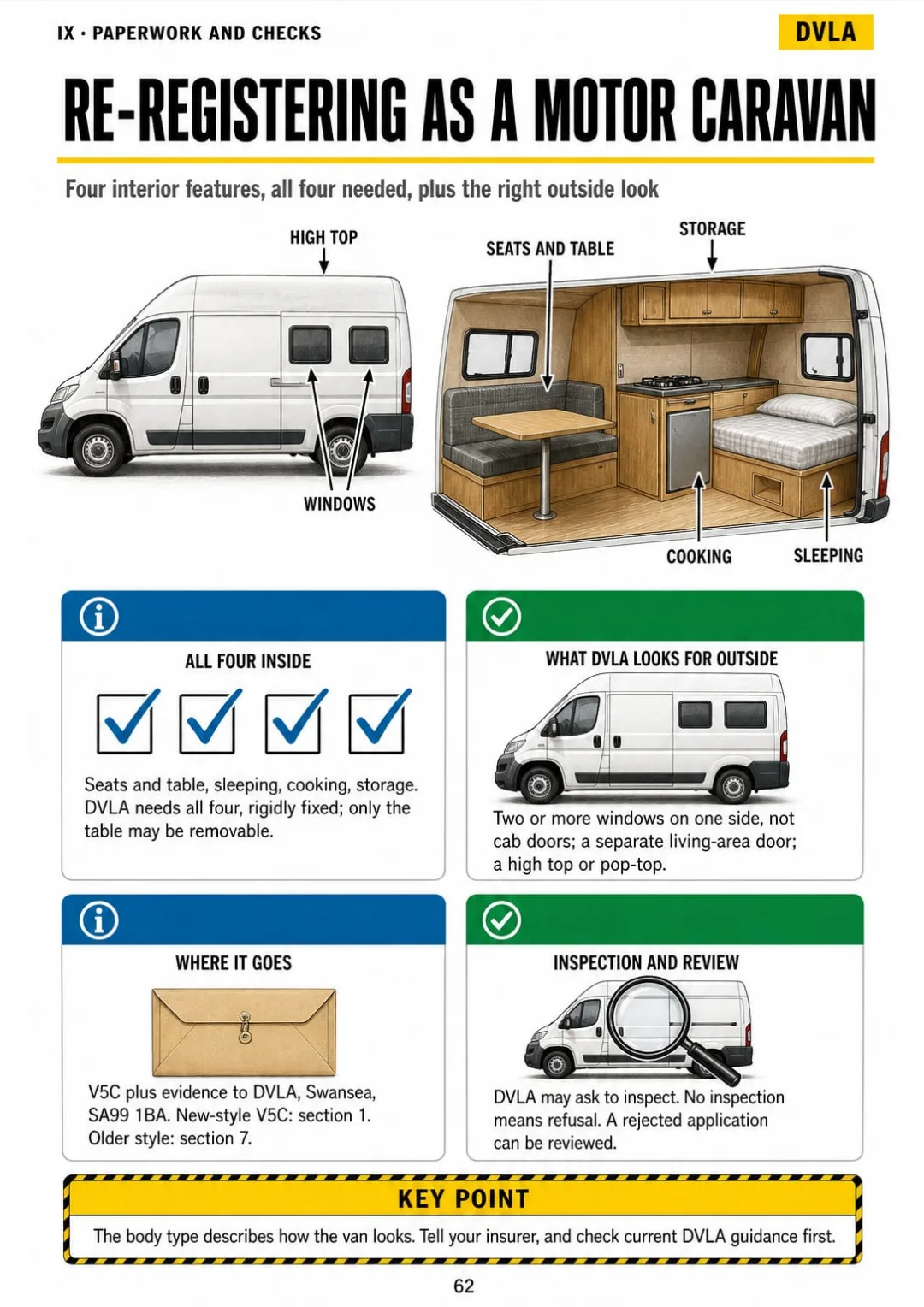
Seats and table, bed, cooking, storage: all four, rigidly fixed, before you apply
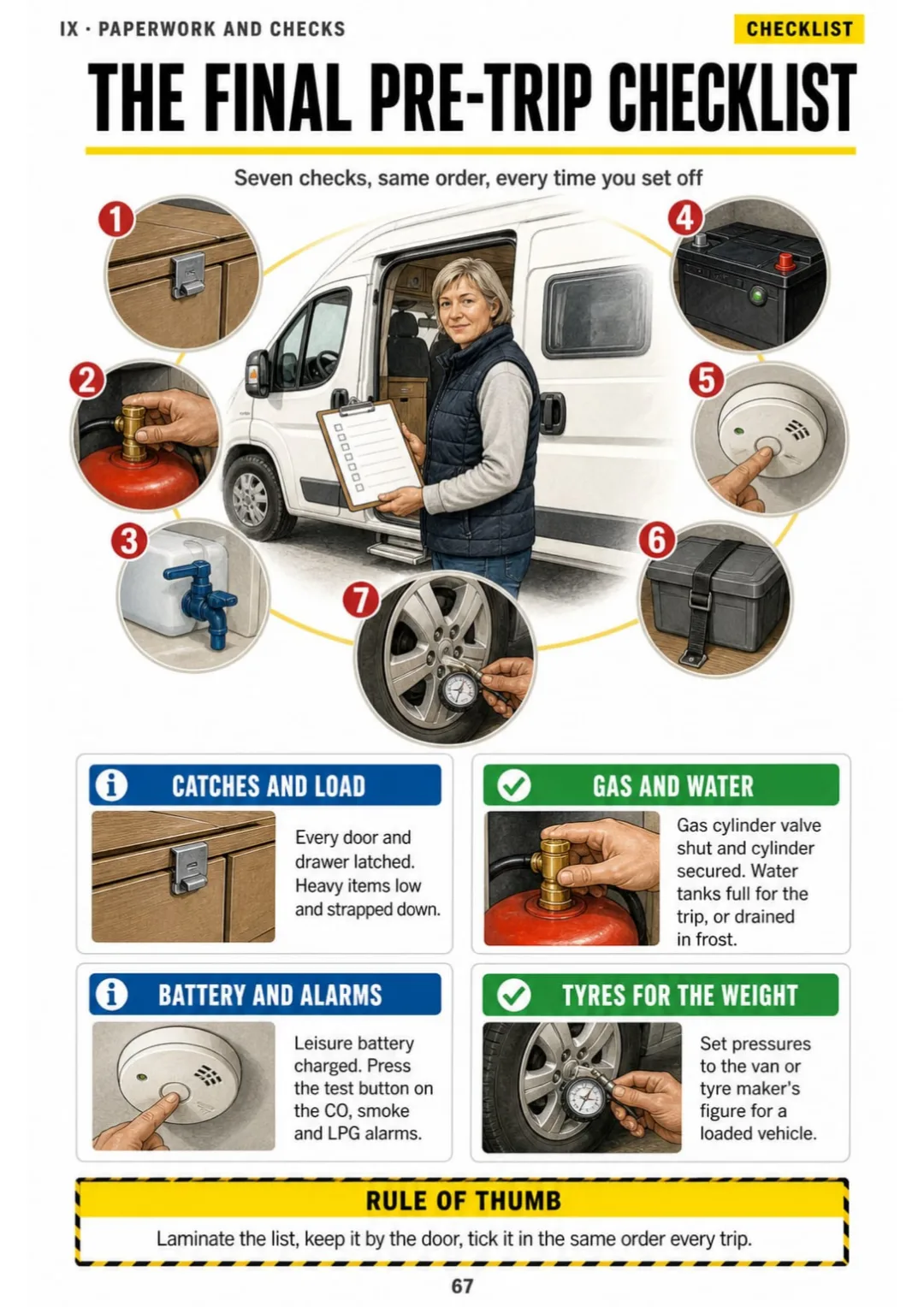
Catches, gas, water, battery, alarms, load, tyres: seven ticks before you go

Swipe to see more →

These are real pages from the book. The table of contents is the full one: 9 parts and 64 topics.

The Problem Isn't You. It's How It Was Explained.

You're standing at the open back doors with a 70-litre water tank and a leisure battery, working out where they go. There's room behind the rear axle. But is that the right place?

The forums and the handbook answer in paragraphs: gross vehicle weight, axle plate ratings, centre of gravity. You read it all and still can't picture where the tank should sit.

Water, batteries and gas low and between the axles; check each axle limit

In the book, axle loads are one page: the van drawn side-on with both axles marked, water, batteries and gas drawn low and between the axles, and a box reminding you to check each axle limit on the VIN plate.

The same goes for payload, the weighbridge, the wall section, the roof vent and the 12 V system: each one has its own drawn page.

You see where the weight goes, you put it there, and you don't have to go back to the forums to check.

COMPARE FOR YOURSELF

The Same Topic, Two Ways to Learn It

THIS
  • The handbook: line after line
  • Weights and sums explained only in words
  • You start the build still unsure
The payload available for conversion is determined by subtracting the vehicle's unladen mass in running order, as established at a weighbridge, from the maximum permitted gross vehicle weight stated on the manufacturer's plate. Each component of the conversion must then be assessed for mass, including sheet materials (an 18 mm plywood sheet typically approaching 30 kg), leisure batteries, fresh water at approximately one kilogram per litre, gas cylinders, appliances, fixings and adhesives, with an allowance retained for occupants, fuel and personal equipment.
FOR THIS
  • The build weight in one drawing
  • The kilos for each item in a box
  • You see it and you get it
18 mm ply about 30 kg a sheet, 100 Ah lithium about 12 kg, 70 litres = 70 kg
CONTENTS

Take a Look at the 9 Parts and 64 Topics

Planning, weight and layout, windows and vents, insulation, lining and floor, furniture, water and gas, 12 V electrics and the paperwork: 68 pages, all illustrated

IBefore You Pick Up a Tool · pp. 5-11
  1. The Right Order: Permanent Jobs First
  2. Choosing the Van: Wheelbase and Roof Height
  3. Reading the VIN Plate
  4. Your Licence and the 3,500 kg Line
  5. Rust, Leaks and Old Holes: The Pre-Build Inspection
  6. Stripping Out and Cleaning Back
  7. Tools You Actually Need
IIWeight and Layout · pp. 12-18
  1. Payload: The Sum That Comes First
  2. Weigh the Empty Van at a Weighbridge
  3. Adding Up the Build: A Worked Example
  4. Axle Loads and Where the Weight Sits
  5. Fixed Bed or Convertible Bed
  6. Planning the Layout on Paper First
  7. Seats and Seatbelts for Travelling
IIIWindows and Roof Vents · pp. 19-25
  1. Where to Put the Windows
  2. Bonded or Rubber-Mounted Windows
  3. Cutting the Panel Cleanly
  4. The Roof Vent Opening
  5. Sealing Roof Holes So They Never Leak
  6. Fixed Ventilation: High and Low
  7. Gas Drop-Out Vents
IVInsulation and Condensation · pp. 26-33
  1. Why Vans Drip: The Dew Point
  2. The Wall Section, Layer by Layer
  3. Vapour Control on the Warm Side
  4. Choosing Insulation Materials
  5. Thermal Bridges: The Ribs and Pillars
  6. Sound Deadening: How Much Is Enough
  7. The Floor Section
  8. The Roof and Ceiling Section
VBattens, Lining and Floor · pp. 34-39
  1. Fixing Battens Without New Holes
  2. Running Cables Before You Line
  3. Ply Lining the Walls
  4. Lining the Ceiling
  5. Laying the Subfloor
  6. The Finished Floor Covering
VIFurniture · pp. 40-46
  1. Ply Thickness for Each Job
  2. The Bed Frame
  3. Kitchen Unit and Worktop
  4. Seating and a Table
  5. Fixing Furniture So It Stays Put
  6. Catches, Doors and Rattles
  7. Storage You Can Reach
VIIWater, Gas and Heating · pp. 47-53
  1. The Simple Water System
  2. Tank Sizes and Where They Go
  3. Grey Water and Draining Down
  4. Gas: Who Must Do What
  5. The Gas Locker
  6. Diesel Heaters: Air and Exhaust
  7. Alarms and Fire Safety
VIII12 V Electrics · pp. 54-61
  1. The 12 V System at a Glance
  2. Working Out Your Daily Use
  3. Sizing the Battery
  4. Charging From the Engine
  5. Solar Panels and Controllers
  6. Cable Size and Voltage Drop
  7. Fuses: Protecting the Cable
  8. Mains Hook-Up Is a Job for a Qualified Electrician
IXPaperwork, Checks and Common Mistakes · pp. 62-68
  1. Re-Registering as a Motor Caravan
  2. Photos and Records to Keep
  3. Telling Your Insurer
  4. Weigh It Again When It's Finished
  5. Speed Limits and MOT for Motor Caravans
  6. The Final Pre-Trip Checklist
  7. The Most Common Mistakes, Side by Side

One Page, One Topic, All Clear

Think of it this way:

It's Saturday morning, the van is stripped back to bare metal, and you need to know what goes on the walls first: deadening, insulation or the vapour layer.

You open the book at the wall section and there it is: metal, deadening, insulation, vapour layer, battens and lining, drawn as a cut-through with every layer named.

Metal, deadening, insulation, vapour layer, battens, lining: the wall in order.

Same with the payload sum, cutting the window hole, the roof vent, the 12 V layout and re-registering: each one on its own page.

Campervan Conversion Illustrated is 68 pages in 9 parts, all drawn, and the two bonus books add the worked sums, the planning sheets and the most common mistakes, drawn before and after.

What you see drawn, you don't have to memorize.

What's Inside Campervan Conversion Illustrated:

Ipp. 5-11

Before You Pick Up a Tool

The right build order, choosing the van, the VIN plate, the 3,500 kg line, the pre-build inspection, stripping out and the tools you really need

IIpp. 12-18

Weight and Layout

Payload, the weighbridge, adding up the build, axle loads, fixed or convertible bed, the layout on paper and travel seats

IIIpp. 19-25

Windows and Roof Vents

Where the windows go, bonded or rubber-mounted, cutting the panel, the roof vent, sealing holes, high and low ventilation and gas drop-out vents

IVpp. 26-33

Insulation and Condensation

Why vans drip, the wall section layer by layer, vapour control, insulation materials, thermal bridges, sound deadening, floor and roof

Vpp. 34-39

Battens, Lining and Floor

Battens without new holes, cables before lining, ply walls, the ceiling, the subfloor and the finished floor

VIpp. 40-46

Furniture

Ply thickness for each job, the bed frame, kitchen and worktop, seating and table, fixing furniture, catches and storage

VIIpp. 47-53

Water, Gas and Heating

The simple water system, tanks, grey water and draining down, who does the gas work, the gas locker, diesel heaters and alarms

VIIIpp. 54-61

12 V Electrics

The 12 V system at a glance, daily use, battery size, engine charging, solar, cable size, fuses and why mains hook-up is for an electrician

IXpp. 62-68

Paperwork, Checks and Common Mistakes

Re-registering as a motor caravan: the fixed features inside and the external features the DVLA looks for, photos and records, your insurer, the final weigh, speed limits and MOT, the pre-trip checklist and the common mistakes

At the end of the book: A final pre-trip checklist and the most common mistakes, side by side.
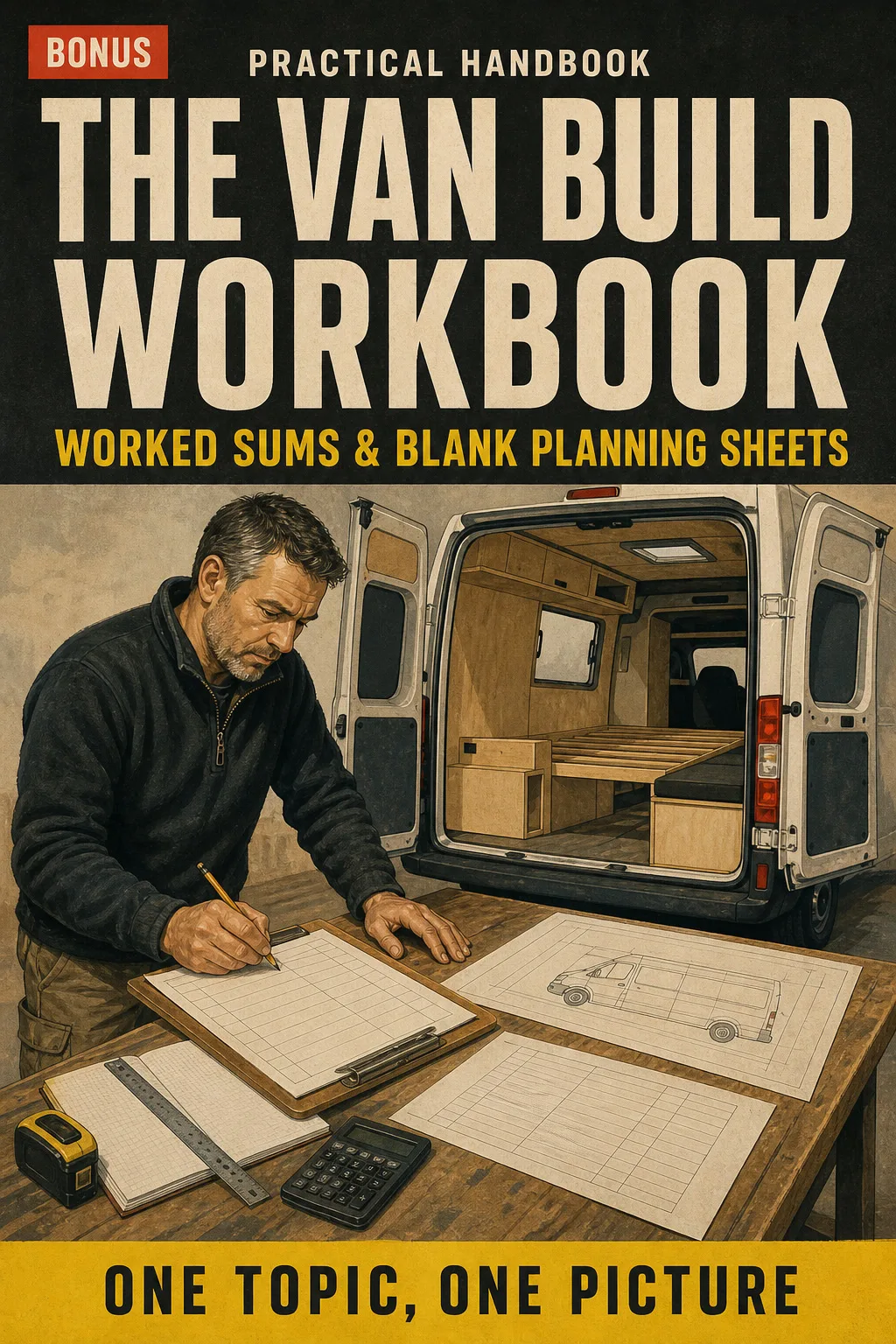
Plus: 2 Free Books

The Van Build Workbook: Worked Sums & Blank Planning Sheets

BONUS 1: «The Van Build Workbook: Worked Sums & Blank Planning Sheets»

Value on its own: US$ 17.90

Practise the sums before you buy a single sheet of ply: payload, battery use and cut lists worked step by step, plus blank layout and record sheets to fill in for your own van.

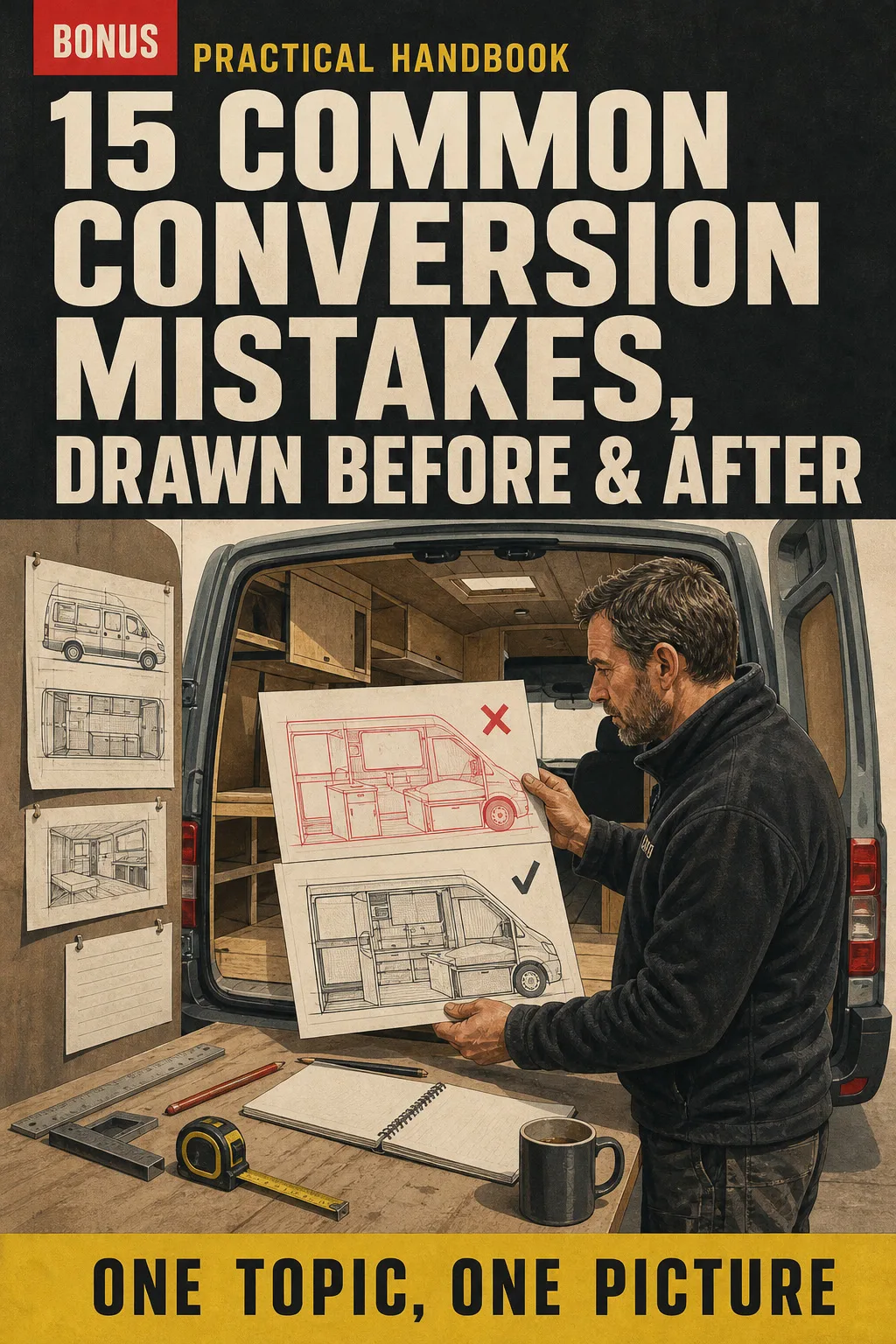
15 Common Conversion Mistakes, Drawn Before & After

BONUS 2: «15 Common Conversion Mistakes, Drawn Before & After»

Value on its own: US$ 14.90

See the mistakes that cost the most to undo, from missing vapour control to vents in the wrong place, each one drawn wrong and right on a single page.

Campervan Conversion Illustrated with 2 Free Books

  • Campervan Conversion Illustrated: 68 illustrated pagesUS$ 63
  • BONUS 1: The Van Build Workbook: Worked Sums & Blank Planning SheetsUS$ 17.90
  • BONUS 2: 15 Common Conversion Mistakes, Drawn Before & AfterUS$ 14.90
  • High-resolution PDF to printIncluded
Total value US$ 95.80
YOUR PRICE:
US$ 27
You save US$ 68.80
YES, I WANT CAMPERVAN CONVERSION ILLUSTRATED FOR US$ 27

📄 This is a digital PDF book sent to your email: nothing is printed or shipped.

Secure purchaseEncrypted payment30-day guarantee

PDF by email: We email you Campervan Conversion Illustrated as a PDF, together with the two free books. It's a single payment: no installments, no extra charges.

Who This Book Is For

You're planning the build

You're planning the build

Before you buy the van or the first sheet of ply, you see the whole job in order and know what comes first.

The van is about to arrive

The van is about to arrive

Payload, layout and where the windows go are worked out on paper, so the first cut goes in the right place.

You've already started

You've already started

Each page sits open in the van while you work: the wall layers, the 12 V layout, the furniture fixings, ready to check.

Everything You Get Today

US$ 95.80US$ 27
YES, I WANT CAMPERVAN CONVERSION ILLUSTRATED FOR US$ 27

📄 This is a digital PDF book sent to your email: nothing is printed or shipped.

30DAYS
GUARANTEE

30-Day Guarantee

Try Campervan Conversion Illustrated for 30 days, bonus books included.

We refund everything if the file won't open, if the book isn't what you see here, if you were charged twice or if the email doesn't arrive. Just email us.

You pay once. No subscriptions.

Frequently Asked Questions

Is it for me if I've never done a full conversion?

Yes. It starts from the right order and explains every job from scratch. If you're already handy with wood, you'll still get the weight sums, the insulation layers and the 12 V layout in one place. It isn't written for one model: it works for any panel van, in metric and for UK rules, and where vans differ it tells you what to check on yours, like the axle limits on the plate.

Where does the content come from?

From current UK guidance: DVLA guidance on changing the body type to motor caravan, GOV.UK and DVSA rules on weights and MOT, and the British Standards for leisure vehicles. Figures are checked against the current versions.

Is it official material?

No. It's an independent illustrated book. It isn't affiliated with the DVLA or any other body, and it can't promise that your re-registration will be accepted.

Does it replace a qualified engineer or electrician?

No. Any gas work must be done by a registered, qualified gas engineer, mains hook-up by a qualified electrician, and your 12 V wiring should be checked by a qualified person.

Isn't all this free on YouTube?

A lot of it is, in pieces and in different orders. Here every job is one drawn page, in the order the build goes, with the UK rules and the kilos alongside, so you can print it and keep it open in the van instead of pausing a video.

When and how does it arrive?

As a PDF by email, sent to the address you enter at checkout. The 2 bonus books come the same way.

Do I have to pay every month?

No. It's a single payment, with no subscription.

Can I have it on paper?

Yes. The PDF is made to print, so you can keep the pages in a folder in the van.

How does the refund work?

You have 30 days. We refund everything if the file won't open, if the book isn't what you see on this page, if you were charged twice or if the email doesn't arrive: just email us.

Before You Close This Page

No more build videos that contradict each other.

The wall layers, drawn once, and no more guessing.

You start the build knowing where every job goes.

Drawings make studying faster.

The book is right below.

One-time payment: US$ 27 · Guarantee: 30 days · PDF by email

YES, I WANT CAMPERVAN CONVERSION ILLUSTRATED FOR US$ 27

📄 This is a digital PDF book sent to your email: nothing is printed or shipped.